AKC-SP-003
Why Is Ceylon Cinnamon Different from Other Cinnamon?
The story behind Sri Lanka’s famous “true cinnamon” and the natural heritage that made it special
🌿 Introduction
Cinnamon is one of the world’s most familiar spices.
We add it to tea, desserts, baked foods, curries and many traditional dishes. But behind the small cinnamon stick in our kitchen is a remarkable story of agriculture, trade, craftsmanship and Sri Lankan heritage.
That story is Ceylon Cinnamon.
The principal “true cinnamon” species cultivated in Sri Lanka is Cinnamomum verum, a species closely associated with the island and its cinnamon heritage.
But what makes Ceylon Cinnamon different from other types of cinnamon?
To understand that, we first need to look at what is actually meant by “cinnamon.”
🌿 1. What Is Ceylon Cinnamon?
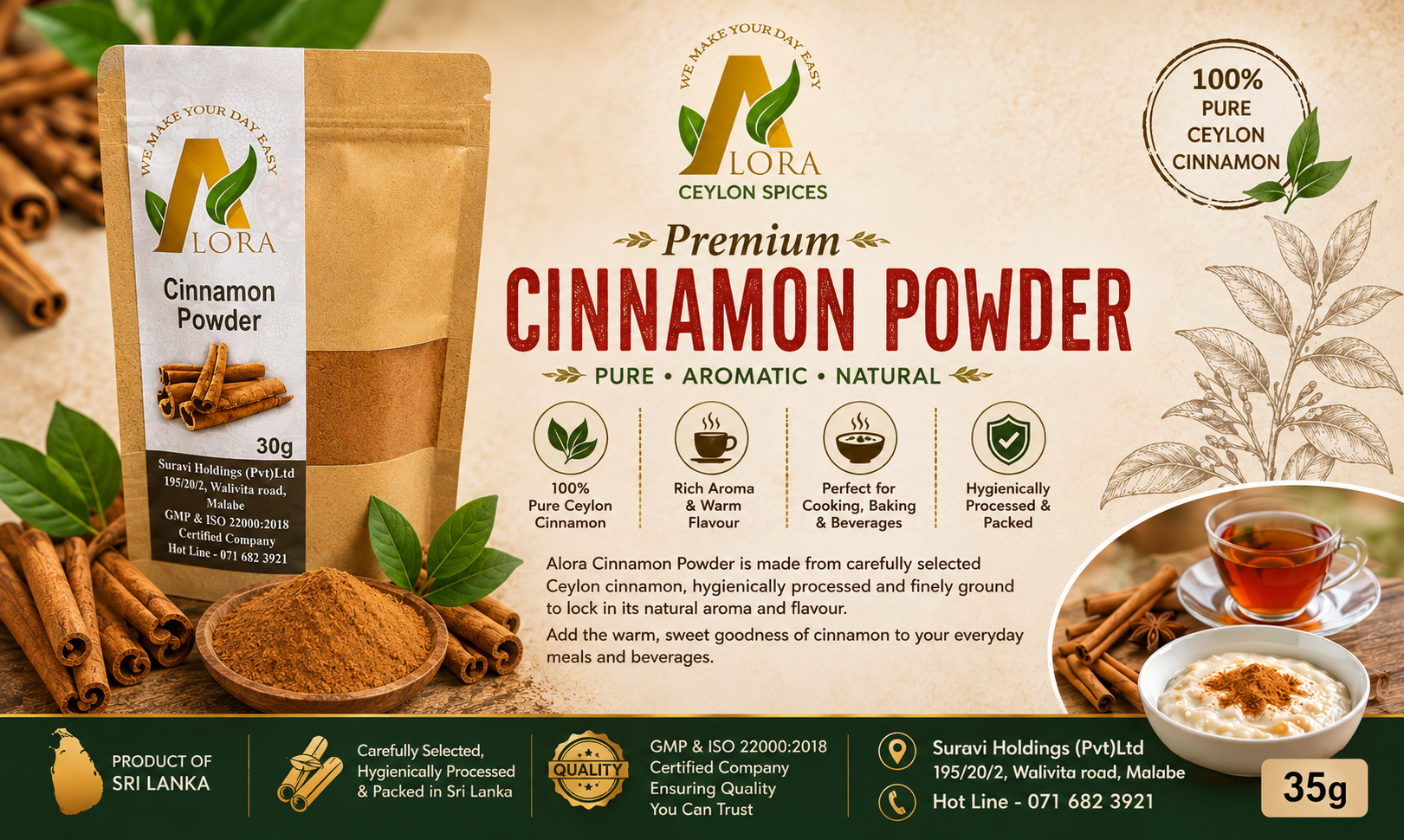
Ceylon Cinnamon, commonly known as True Cinnamon, comes from the species Cinnamomum verum.
Sri Lanka is internationally recognised as an important source of this cinnamon, and the name “Ceylon Cinnamon” is closely connected with the country’s former name, Ceylon, as well as its geographical and agricultural heritage.
Ceylon Cinnamon is therefore more than simply “cinnamon from Sri Lanka.”
It represents a combination of:
🌱 A distinctive plant species
🇱🇰 Sri Lankan geographical origin
👨🌾 Traditional cultivation knowledge
🪵 Special processing skills
🌍 A long-established international reputation
🌱 2. Which Part of the Cinnamon Tree Do We Use?
The familiar cinnamon stick is actually the inner bark of the cinnamon plant.
Suitable stems are harvested and carefully processed. The outer bark is removed, and the inner bark is peeled and prepared into cinnamon quills.
This is much more skilled than it may appear.
The peeling, cleaning, preparation, drying and grading of cinnamon require considerable knowledge and experience.
Sri Lanka’s Department of Cinnamon Development provides training and support related to cinnamon processing and post-harvest technology, reflecting the importance of these skills within the industry.
🌿 3. Is Ceylon Cinnamon the Same as Cassia?
No.
This is one of the most important things to understand when buying cinnamon.
The word “cinnamon” is used for several species within the Cinnamomum genus.
Some commonly traded types include:
| Type |
Scientific name |
Major producing region |
| Ceylon Cinnamon / True Cinnamon |
Cinnamomum verum |
🇱🇰 Sri Lanka |
| Chinese Cassia |
Cinnamomum cassia |
🇨🇳 China and surrounding regions |
| Korintje Cinnamon |
Cinnamomum burmannii |
🇮🇩 Indonesia |
| Saigon/Vietnamese Cinnamon |
Cinnamomum loureiroi |
🇻🇳 Vietnam |
Sri Lanka’s Department of Cinnamon Development distinguishes Ceylon Cinnamon from other commercially important cinnamon species.
So when you see the word “cinnamon” on a product, it does not automatically mean that it is Ceylon Cinnamon.
🔍 4. How Does Ceylon Cinnamon Look Different?
One of the easiest differences to observe is the structure of the cinnamon quill.
Ceylon Cinnamon
Ceylon Cinnamon quills are generally:
- Thin
- Delicate
- Made up of several fine layers
- Relatively light in colour
- More fragile than thick cassia bark
Cassia
Cassia is generally:
- Thicker
- Harder
- More compact
- Darker and rougher in appearance
Ceylon Cinnamon is graded according to characteristics including quill diameter, the number of quills per kilogram and surface appearance.
This is why recognising quality Ceylon Cinnamon is itself a specialised skill.
👃 5. Aroma and Flavour – One of Ceylon Cinnamon’s Distinctive Features
One of the most noticeable characteristics of Ceylon Cinnamon is its delicate aroma and refined flavour.
The Sri Lanka Export Development Board highlights the distinctive quality, colour, flavour and aroma of Ceylon Cinnamon as important factors behind its international reputation.
Compared with some stronger and more pungent cinnamon varieties, Ceylon Cinnamon is often appreciated for its softer, more nuanced flavour.
This makes it particularly versatile in everyday cooking and food preparation.
You can use Ceylon Cinnamon in:
☕ Tea and warm beverages
🥣 Porridge and breakfast foods
🍎 Fruit dishes
🍚 Rice and curries
🍰 Cakes and baked foods
🌿 Spice blends
🧪 6. What About Coumarin?
When comparing Ceylon Cinnamon and Cassia, you will often hear about a naturally occurring compound called coumarin.
Ceylon Cinnamon is generally recognised as having much lower coumarin levels than Cassia varieties. This is an important chemical distinction between the two types of cinnamon.
However, this should not be interpreted as meaning that cinnamon is a medicine.
Cinnamon is a food ingredient and spice, and health claims should be considered carefully and supported by appropriate scientific evidence.
At Alora, we believe that food education should distinguish clearly between traditional uses, nutritional information and medically established claims.
🌱 7. Does Sri Lanka’s Environment Matter?
Yes.
Cinnamon cultivation is influenced by environmental conditions such as:
- Temperature
- Rainfall
- Humidity
- Elevation
- Soil characteristics
Sri Lanka’s Department of Cinnamon Development identifies environmental factors as important to cinnamon cultivation, with the wet zone and its red-yellow podzolic soils being particularly significant for production.
The interaction between the plant, its environment, cultivation practices and processing contributes to the character of Sri Lankan cinnamon.
This is one reason the idea of place and origin is so important when we talk about Ceylon Cinnamon.
👨🌾 8. The People Behind Ceylon Cinnamon
Ceylon Cinnamon is not simply the product of a particular tree growing in Sri Lankan soil.
It is also the result of human knowledge and skill.
Farmers, peelers, processors and other people working within the cinnamon industry have helped preserve cultivation and processing practices across generations.
The traditional peeling and preparation of cinnamon require specialised knowledge, and post-harvest processing remains an important part of maintaining product quality.
So Ceylon Cinnamon represents a connection between:
🌱 Nature
👨🌾 Farmers
🪵 Traditional craftsmanship
🇱🇰 Sri Lankan heritage
🌍 9. Why Does Ceylon Cinnamon Have International Recognition?
The identity of Ceylon Cinnamon is not based only on tradition.
Sri Lanka has taken steps to protect and strengthen the product’s geographical identity.
In 2022, Ceylon Cinnamon received Protected Geographical Indication (PGI) status in the European Union. This recognition links the product with defined geographical origin and production requirements.
The Sri Lanka Export Development Board also operates the Pure Ceylon Cinnamon Certification Mark, which can be used under its licensing system for qualifying products made in Sri Lanka.
These systems help protect the value and authenticity associated with the Ceylon Cinnamon name.
🍵 10. How Can We Enjoy Ceylon Cinnamon in Everyday Life?
You don’t need complicated recipes to enjoy cinnamon.
Try adding Ceylon Cinnamon to:
☕ Tea
Add a small piece of cinnamon quill while brewing tea.
🥣 Porridge
Use a small amount to add natural aroma and flavour.
🍎 Fruits
Cinnamon pairs particularly well with fruits such as apples and bananas.
🥛 Warm Drinks
Combine cinnamon with other natural spices for a comforting warm beverage.
🍚 Cooking
Use it in rice dishes, curries and traditional Sri Lankan recipes.
🍰 Baking
Ground cinnamon works beautifully in cakes, cookies, muffins and other baked foods.
The goal is not to treat cinnamon as a medicine, but to enjoy it as part of a varied and flavourful diet.
🌿 Ceylon Cinnamon – More Than a Cinnamon Stick
Ceylon Cinnamon reminds us why Sri Lanka earned its reputation as the “Spice Island.”
Behind this small natural product are:
🌱 A unique natural environment
👨🌾 Generations of farming knowledge
🪵 Traditional processing skills
🌍 Centuries of international trade
🇱🇰 A strong Sri Lankan identity
Ceylon Cinnamon is therefore more than a spice.
It is part of Sri Lanka’s agricultural, cultural and culinary heritage.
🌿 Alora and Ceylon Cinnamon
At Alora, our goal is not simply to introduce Sri Lankan natural food products to modern consumers.
We also want to help people understand the heritage and value behind the ingredients they use.
Learning about Ceylon Cinnamon helps us appreciate the relationship between Sri Lanka’s natural resources, farmers, traditional knowledge and modern food culture.
This is the purpose of the Alora Knowledge Centre—to share useful, reliable and accessible knowledge about Sri Lankan food and agricultural heritage.
📚 Coming Next
AKC-SP-004
🌶️ Why Is Black Pepper Called the “King of Spices”?
In our next article, we will explore another important Ceylon spice—Black Pepper.
We will look at its history, cultivation, distinctive flavour, nutritional value and simple ways to include it in everyday food.