What is El Niño? Understanding Its Causes, Effects, and Impact on Sri Lanka and the World
Introduction
Have you ever wondered why some years bring severe droughts while others experience devastating floods? One of the world’s most important natural climate phenomena responsible for these weather extremes is El Niño.
Although El Niño begins thousands of kilometers away in the Pacific Ocean, it influences weather patterns across the globe—including Sri Lanka. Farmers, businesses, governments, and everyday people can all feel its effects.
In this article, you’ll learn:
- What El Niño is
- How it forms
- Why it happens
- How it affects the world’s climate
- Its impact on Sri Lanka
- The difference between El Niño and La Niña
- How individuals and businesses can prepare
What Does El Niño Mean?
The name El Niño comes from Spanish and means “The Little Boy” or “Christ Child.”
Peruvian fishermen first observed unusually warm Pacific Ocean waters around Christmas many centuries ago, giving the phenomenon its name.
Today, scientists define El Niño as the abnormal warming of sea surface temperatures in the central and eastern tropical Pacific Ocean.
Where Does El Niño Occur?
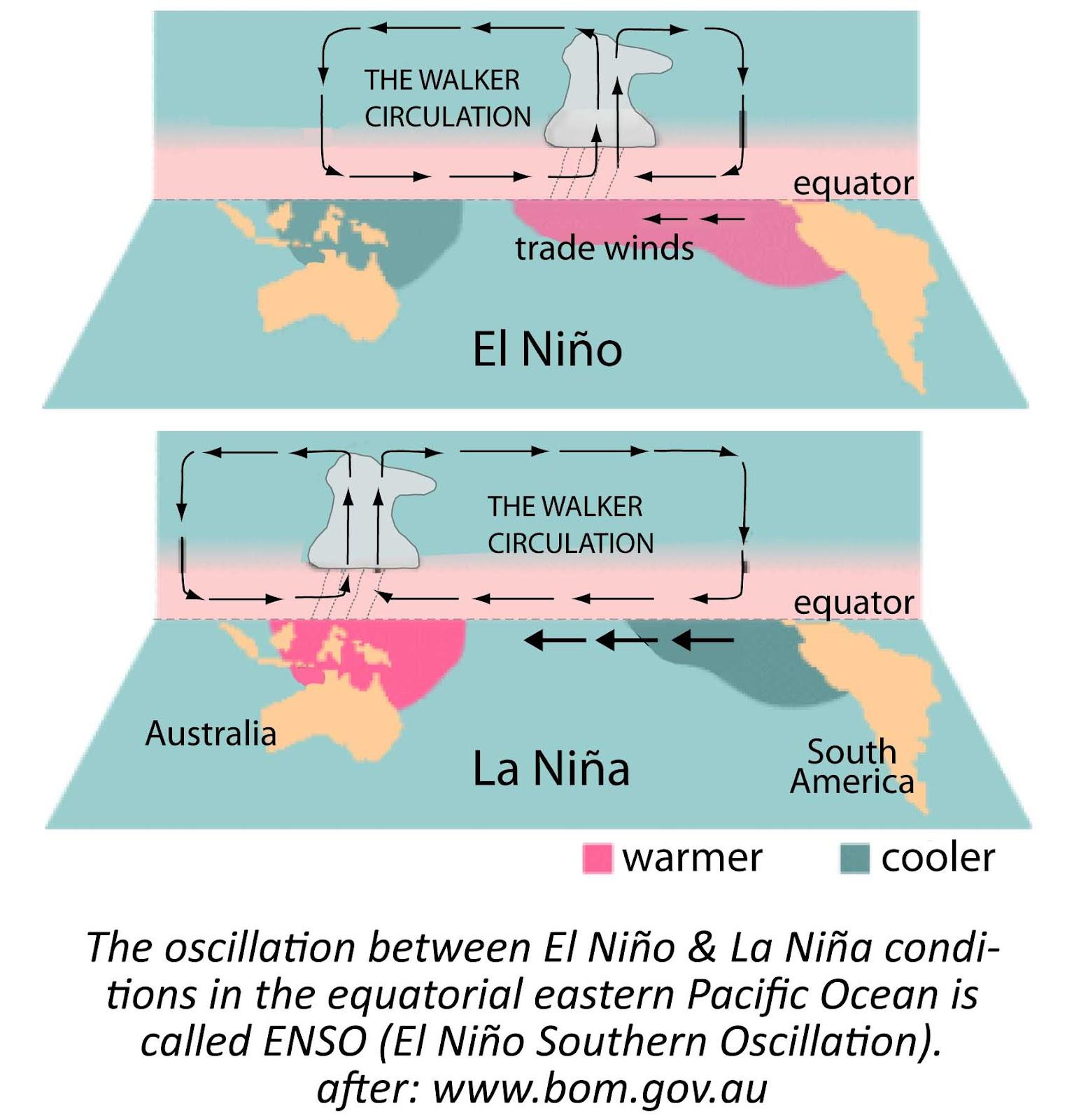
El Niño develops in the tropical Pacific Ocean between South America and Australia.
Although the warming occurs in one region, it changes atmospheric circulation worldwide, affecting rainfall, temperatures, agriculture, fisheries, ecosystems, and economies.
How Does El Niño Form?
Under normal conditions:
- Strong trade winds push warm water westward toward Indonesia and Australia.
- Cold, nutrient-rich water rises along the coast of South America.
- This supports healthy fisheries and balanced weather.
During an El Niño event:
- Trade winds weaken.
- Warm water shifts eastward.
- Cold-water upwelling decreases.
- Rainfall patterns move east.
- Weather changes occur worldwide.
Scientists monitor these changes using satellites, weather stations, ocean buoys, research ships, and advanced climate models.
What Causes El Niño?
El Niño is part of a natural climate cycle called the El Niño–Southern Oscillation (ENSO).
ENSO has three phases:
- Neutral
- El Niño (Warm Phase)
- La Niña (Cool Phase)
El Niño usually develops every 2–7 years and can last between 9 and 12 months, although some events persist longer.
Global Impacts of El Niño
Agriculture
El Niño can reduce crop production by causing droughts, irregular rainfall, and heat stress. Farmers may also face increased pest and disease pressure.
Water Resources
Many countries experience water shortages, lower reservoir levels, and increased pressure on irrigation systems.
Fisheries
Warmer ocean water reduces nutrient-rich upwelling, leading to lower fish populations and affecting fishing communities.
Human Health
El Niño can contribute to:
- Heat-related illnesses
- Water shortages
- Reduced food security
- Increased spread of mosquito-borne diseases in some regions
Economy
Agriculture, tourism, insurance, energy production, and transportation may all be affected by extreme weather.
How El Niño Affects Sri Lanka
Sri Lanka often experiences:
- Higher temperatures
- Irregular monsoon rainfall
- Drought during some seasons
- Water shortages
- Lower agricultural productivity
- Stress on tea, rice, coconut, and vegetable cultivation
- Increased demand for electricity due to hotter weather
Understanding seasonal forecasts helps farmers and businesses prepare for these changes.
El Niño vs. La Niña
| El Niño |
La Niña |
| Ocean water becomes warmer |
Ocean water becomes cooler |
| Trade winds weaken |
Trade winds strengthen |
| Some regions become drier |
Some regions receive more rainfall |
| Global temperatures often increase |
Global temperatures are generally slightly lower |
Can El Niño Be Prevented?
No.
El Niño is a natural climate phenomenon and cannot be stopped.
However, its impacts can be reduced through:
- Better weather forecasting
- Water conservation
- Climate-smart agriculture
- Disaster preparedness
- Public awareness
- Sustainable environmental management
Conclusion
El Niño reminds us that Earth’s oceans and atmosphere are deeply connected. A change in ocean temperature thousands of kilometers away can influence rainfall, food production, water resources, and livelihoods across the globe.
By understanding El Niño and preparing in advance, communities, businesses, and governments can reduce risks and build resilience against future climate challenges.
Frequently Asked Questions (FAQ)
What is El Niño?
El Niño is the unusual warming of sea surface temperatures in the central and eastern Pacific Ocean that influences global weather patterns.
How often does El Niño occur?
Typically every 2–7 years.
How long does El Niño last?
Usually between 9 and 12 months.
Does El Niño affect Sri Lanka?
Yes. It can influence rainfall, temperature, agriculture, and water availability.
Can scientists predict El Niño?
Yes. Modern climate monitoring allows scientists to detect developing El Niño conditions months in advance.
Keywords: El Niño, Climate Change, ENSO, Weather Patterns, Pacific Ocean, Sri Lanka Climate, Global Warming, Agriculture, Drought, Floods