Introduction
Sri Lanka is a small island, but its place in world history is much larger than its size might suggest.
One reason is its spices.
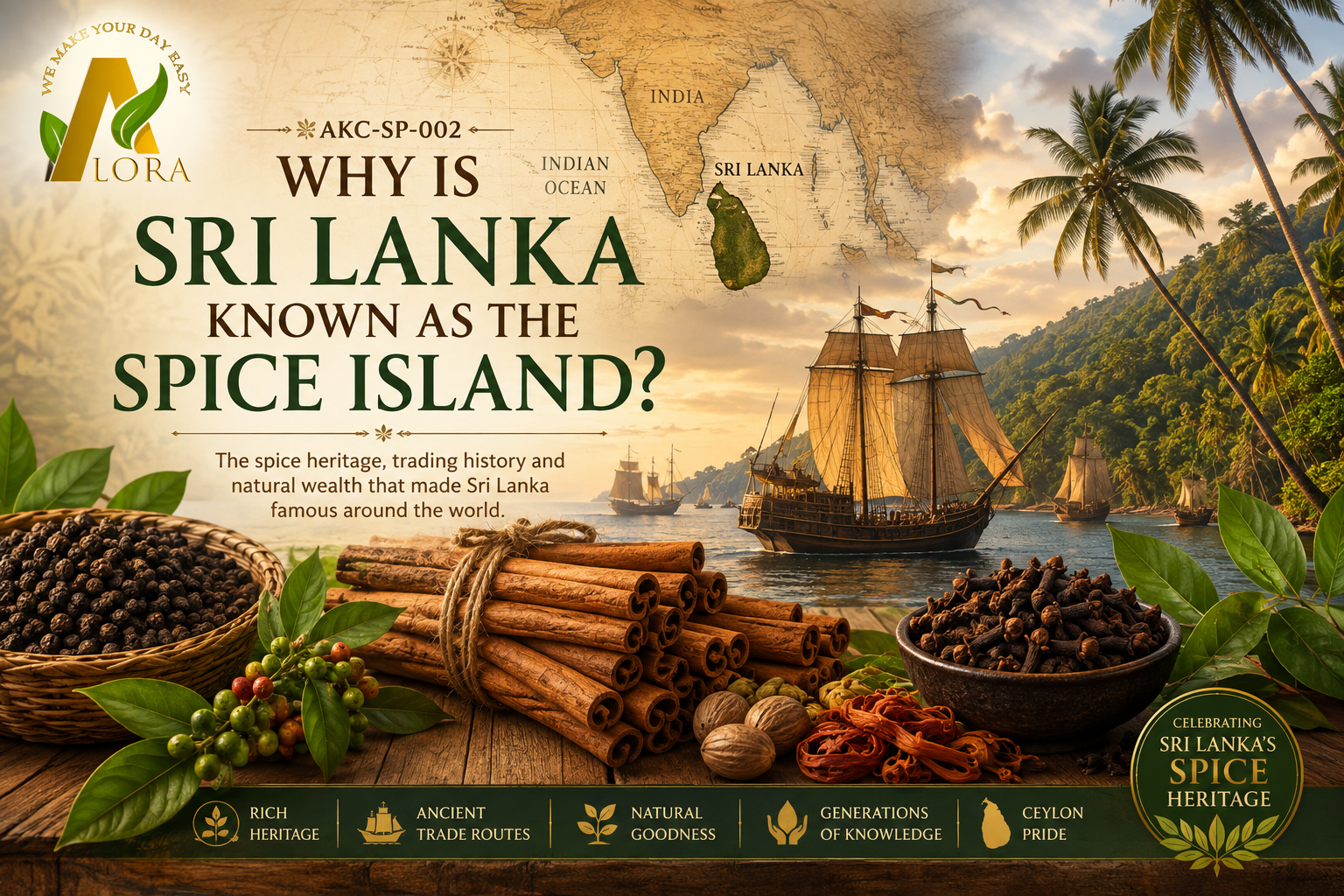
For centuries, Sri Lankan cinnamon, pepper, cloves, cardamom, nutmeg, mace and other spices attracted traders from around the world because of their distinctive flavours, aromas and qualities.
This rich heritage helped establish Sri Lanka’s identity as the “Spice Island.”
Sri Lanka’s Export Development Board describes the country as a long-established global destination for high-quality spices and highlights the importance of Ceylon Cinnamon and other Ceylon spices in international trade.
🌿 1. How Old Is Sri Lanka’s Spice Heritage?
Sri Lanka’s relationship with spices is not a recent development.
For centuries, spices grown on the island have been connected to international trading networks.
Cinnamon has an especially long history. Sri Lanka’s Department of Cinnamon Development notes that the history of cinnamon extends back to ancient times, with an early reference to Ceylon cinnamon appearing in a late tenth-century Arabic work. Historical accounts also describe Sri Lanka as renowned for the quality and abundance of cinnamon.
This means that the connection between Ceylon and the world of spices is a heritage built over many centuries, rather than a modern marketing idea.
🚢 2. Why Was Sri Lanka Important to Ancient Trade?
Sri Lanka’s geographical position played an important role in its spice history.
Located in the Indian Ocean, the island was positioned along important maritime routes connecting East and West.
Sri Lanka’s Ministry of Foreign Affairs notes that during the 13th to 15th centuries, Sri Lanka had established itself as a trade hub on the East–West maritime route and as a gateway to India.
The island also maintained commercial links with places including Malacca, Gujarat and Bengal.
This strategic position allowed Sri Lanka to become an important meeting point for merchants, cultures and commodities moving across the Indian Ocean.
🌍 3. Why Did the World Want Sri Lankan Spices?
Today, spices are ordinary ingredients in our kitchens.
But in the ancient and medieval world, many spices were highly valued trading commodities.
Cinnamon and pepper, in particular, were among the spices that made Sri Lanka internationally famous.
The Sri Lanka Export Development Board notes that global powers competed for trading rights to Ceylon Cinnamon and Pepper, particularly during the 15th century.
The history of Sri Lankan spices is therefore more than a story about food.
It is also a story about:
- 🌊 Maritime trade
- 🚢 Exploration
- 🌍 International commerce
- 💰 Economic value
- 🏛️ Political power
- 🌿 Natural resources
🪵 4. Ceylon Cinnamon – The Crown of Sri Lanka’s Spice Heritage
When we talk about Sri Lanka as the “Spice Island,” one spice deserves special attention:
Ceylon Cinnamon
Sri Lanka is internationally recognised as the home of true cinnamon, Cinnamomum verum, commonly known as Ceylon Cinnamon.
Its distinctive aroma, delicate flavour, colour and other characteristics have given it a special position in the global spice market.
The name “Ceylon Cinnamon” is also closely connected with Sri Lanka’s former name, Ceylon, and has become an important geographical identity for the product.
The Department of Cinnamon Development continues to promote Ceylon cinnamon as an important export-oriented crop and emphasises quality, sustainability and the wellbeing of stakeholders in the industry.
🌱 5. Did Sri Lanka’s Natural Environment Help?
Yes.
Sri Lanka’s spice heritage cannot be explained by trade history alone.
The island has a remarkable diversity of:
- Climate zones
- Soil types
- Rainfall patterns
- Elevations
- Temperatures
- Microclimates
These environmental conditions, together with traditional cultivation and processing practices, contribute to the distinctive characteristics of Sri Lankan spices.
The Export Development Board describes the country’s terroir—the interaction of its environment and growing conditions—as an important factor behind the aroma and flavour characteristics of Ceylon spices.
👨🌾 6. The People Behind the Spice Heritage
When we talk about Sri Lanka’s spice heritage, we should not think only about ancient traders, kings or colonial powers.
There is another group at the heart of this story:
Sri Lankan farmers.
Much of the country’s spice sector is built around smallholders and home gardens. The Export Development Board reports that more than 70% of cultivated spice land is made up of smallholdings and home gardens.
Generations of farmers have preserved knowledge about cultivation, harvesting, processing and traditional uses.
They are an essential part of the story behind the name Ceylon Spices.
🇱🇰 So, Why Is Sri Lanka Called the “Spice Island”?
There is no single reason.
Sri Lanka’s identity as the Spice Island developed through the combination of:
🌿 A rich and diverse natural environment
🚢 A strategic location in the Indian Ocean
🌍 Centuries of international trade
🪵 Distinctive Ceylon Cinnamon
🌶️ A wide variety of valuable spices
👨🌾 Generations of farming knowledge
🏛️ A long and fascinating cultural and commercial history
Together, these elements created a spice heritage that has connected Sri Lanka with the rest of the world for centuries.
🌿 The Heritage Continues Today
The name “Spice Island” is not simply a reference to Sri Lanka’s past.
Sri Lanka continues to produce and export Ceylon Cinnamon, Ceylon Pepper, Cloves, Cardamom, Nutmeg, Mace and other spices.
The challenge—and opportunity—for today’s generation is to carry this heritage forward through quality, responsible production, innovation and sustainable agriculture.
At Alora, we believe Sri Lanka’s natural food heritage deserves to be appreciated, understood and introduced to modern consumers in meaningful ways.
Our journey is not only about creating food products.
It is also about celebrating the natural treasures of Sri Lanka and the people who bring them to us.
📚 Coming Next
AKC-SP-003
🌿 Why Is Ceylon Cinnamon Different From Other Cinnamon?
In our next article, we will explore Ceylon Cinnamon in greater depth—including its history, characteristics, varieties, traditional processing methods and why it has earned such a special place in the world of spices.